Introduction
Bioreactors, as vital components in modern biotechnology, encapsulate the dynamic interplay between engineering and biology. Their design and operation are central to optimizing microbial processes, which are foundational to numerous industrial and pharmaceutical applications. Let's explore the significance of bioreactors and the challenges they encounter, particularly focusing on bacterial crowding and its impact on process efficiency.
The Relevance of Bioreactors in Microbial Processes
Bioreactors, specialized vessels for conducting biological reactions, are integral to various industries, especially in biotechnology and pharmaceuticals. Their primary role is to provide a controlled environment for the effective growth and maintenance of microorganisms, facilitating the production of bio-products. Bioreactors are designed to regulate parameters such as temperature, pH, oxygen levels, and nutrient supply, ensuring optimal conditions for microbial activities. The versatility and control offered by bioreactors make them indispensable for applications ranging from waste treatment to the production of pharmaceuticals, biofuels, and other bio-based products.
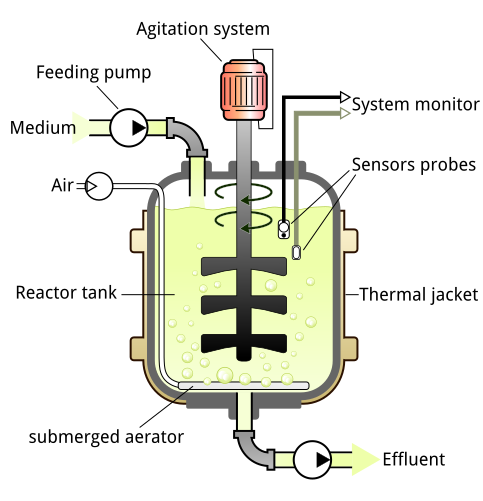
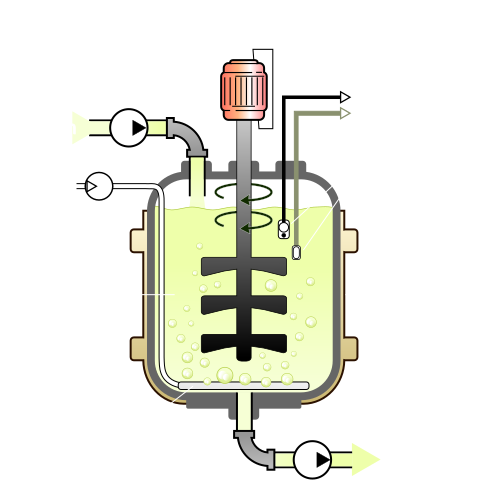
The Challenge of Bacterial Crowding in Bioreactors
A critical issue in the operation of bioreactors is the phenomenon of bacterial crowding. As microorganisms proliferate, they tend to aggregate, leading to high cell densities. This crowding can significantly impede their effectiveness in two primary ways:
-
Reduced Nutrient Uptake: High cell densities in bioreactors result in reduced surface area relative to the volume occupied by the bacteria. This leads to limited exposure of individual cells to the medium, constraining their ability to uptake essential nutrients effectively. Nutrient uptake is a vital process for microbial growth and product formation, and its limitation can severely impact the overall efficiency of the bioreactor.
-
Impaired Growth and Product Output: Bacterial crowding not only affects the growth rate of the microorganisms but also their productivity. In industrial processes where the goal is to maximize the yield of a specific product, such as a therapeutic protein or a biochemical, the aggregation and resulting limited nutrient access can lead to suboptimal production levels.
Addressing the Challenge: Estimating Nutrient Uptake Rates
To mitigate the effects of bacterial crowding, it is essential to understand and model the nutrient uptake process accurately. One key approach is the use of the Michaelis-Menten equation, a well-established model in enzyme kinetics. This model describes the rate of enzymatic reactions by relating the reaction rate to the concentration of a substrate (in this case, the nutrient). By applying the Michaelis-Menten framework, we can estimate the rate at which nutrients are absorbed by the cells under varying conditions of crowding and substrate concentration.
However, the Michaelis-Menten equation alone does not account for all the complexities of microbial metabolism in crowded environments. Additional factors, such as the actual surface area of the cells available for nutrient uptake, must also be considered. This includes understanding the changes in cell morphology and the proportion of the cell membrane in contact with the medium, which can significantly influence uptake rates.